
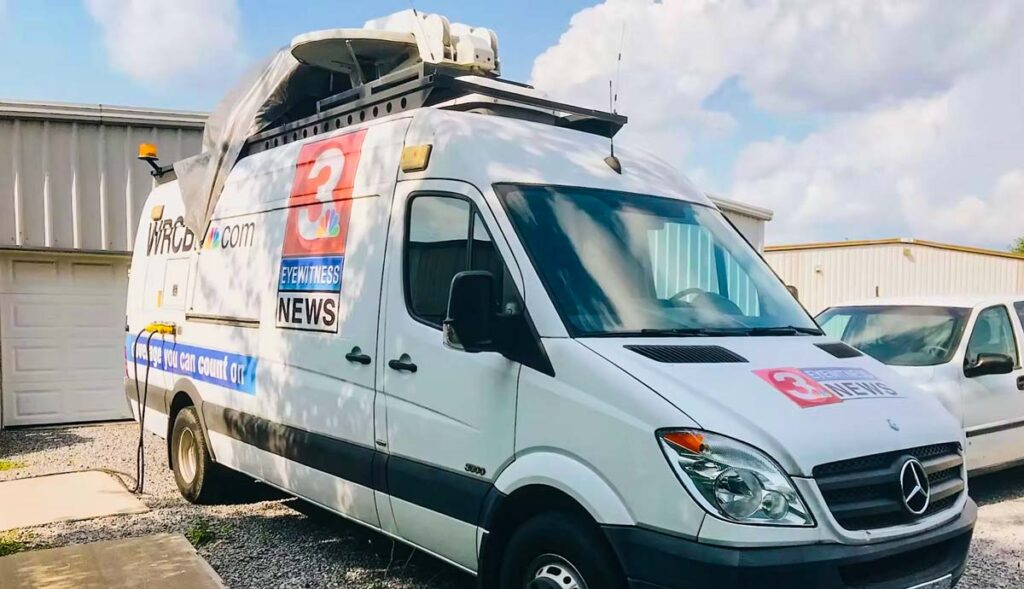

The production model that keeps crews at home and sends only cameras to the venue.
Remote production — also called REMI (Remote Integration Model) or at-home production — flips the traditional broadcast model on its head. Instead of sending a full production crew and a truck to every event, you send cameras and a small technical crew to the venue and produce the show from a centralized control room that could be hundreds of miles away.
The model has transformed how sports networks, universities, and corporate organizations cover live events. It reduces travel costs, staffing requirements, and the logistical complexity of multi-venue production schedules. But it also demands infrastructure that many facilities do not yet have.
How REMI Works
In a traditional production, everything happens at the venue. Cameras, switcher, audio board, replay, graphics, and the entire production crew are all on-site. In a REMI workflow, the venue becomes a contribution site. Cameras capture the action. A small on-site crew handles camera operation and local audio pickup. Video and audio signals are encoded and transported over IP to a central production facility where the director, technical director, audio engineer, graphics operator, and replay operator do their work.
The control room team produces the show as if they were at the venue. They see every camera feed in real time. They communicate with the on-site crew through intercom. They switch cameras, mix audio, trigger graphics, and control replay from the same console positions they would use for any local production.
The finished program is sent directly to its destination — a streaming platform, a broadcast network, or an in-venue display system — from the central control room.
Why Organizations Are Adopting REMI
- Cost reduction: Sending 2-3 people to a venue instead of 8-12 cuts travel, lodging, and per diem expenses dramatically. For organizations covering 30-50+ events per season the savings add up fast.
- Crew efficiency: The same production team can cover multiple events from one location. A director finishes one game and pivots to the next without leaving the building.
- Consistent quality: Productions happen in a purpose-built control room with ergonomic furniture, proper acoustics, and reliable infrastructure rather than in a temporary setup at the venue.
- Reduced equipment at the venue: Cameras, encoders, and communication gear travel. The switcher, replay server, graphics system, and audio board stay in the control room.
- Scalability: Adding coverage of a new venue requires sending cameras and an encoder — not building or renting an entire production infrastructure.
What Your Control Room Needs for REMI
A control room built for REMI has specific requirements beyond a standard local production room.
- High-bandwidth connectivity: You need reliable, low-latency transport between the venue and the control room. This typically means dedicated fiber, bonded cellular, or managed IP transport services. Public internet is not reliable enough for professional broadcast contribution.
- Encoding and decoding: Hardware encoders at the venue compress video for transport. Decoders at the control room reconstruct the signals. The codec and transport protocol directly affect latency and video quality. HEVC, SRT, and RIST are common protocols.
- Expanded routing: The control room router must handle incoming remote feeds alongside local sources. Plan for enough inputs to handle the maximum number of simultaneous remote venues plus local cameras and sources.
- Communication infrastructure: Intercom between the control room and the venue is critical. Low-latency IP-based intercom systems allow the director to communicate with camera operators and the on-site crew as if everyone were in the same building.
- Monitoring: The multiviewer layout must accommodate remote camera feeds, local sources, program output, and system status simultaneously. Remote productions often require more monitoring real estate than local shows.
- Timing and synchronization: Signals arriving from a remote venue have inherent transport delay. Frame synchronizers and timing infrastructure ensure all sources align before reaching the switcher.
The single biggest technical challenge in REMI is latency. Every millisecond of delay between the venue and the control room affects the director’s ability to call shots in real time. Budget for the best transport solution your project allows.
When REMI Makes Sense
- Multi-venue sports coverage where building a control room or sending a truck to every venue is cost-prohibitive
- University athletic programs covering 15-20+ sports across multiple facilities
- Church organizations with satellite campuses that need centralized production
- Corporate organizations producing town halls and events at offices in multiple cities
- Any operation where the cost of sending a full crew to every event exceeds the cost of centralized production infrastructure
When REMI Does Not Make Sense
- Single-venue operations where all productions happen in one location
- Events where ultra-low latency is essential and transport infrastructure is unreliable
- Productions where the full crew needs physical proximity to talent and the event environment
- Venues without reliable network connectivity for signal transport
Exploring remote production for your organization?
TakeOne designs control rooms optimized for REMI workflows. We handle the transport infrastructure, encoding, routing, and communication systems that make remote production reliable.
Call 1-877-818-2531 to talk through your remote production goals.
About TakeOne Broadcast Solutions
TakeOne is a full-service broadcast video integrator and consultant that designs, builds and supports professional video systems for sports venues, universities, churches and broadcast facilities nationwide. From control room design through equipment integration and operator training, we handle every phase of the project.
Request a control room assessment or call 1-877-818-2531 to discuss your project.