

Walk into almost any modern control room, worship auditorium, or stadium production and you’ll notice something: the pictures look more like film than “TV” used to. Shallow depth of field. Rich, filmic color. Highlights that roll off gently instead of clipping to white. That look is the result of cinema cameras moving into spaces that used to be the exclusive territory of traditional broadcast cameras.
If you’re weighing whether cinema-style acquisition belongs in your workflow — but you’re not yet sure what actually separates a cinema camera from a broadcast camera — this primer is for you. No jargon for its own sake, just the practical differences that affect what you buy and how you shoot.
What actually makes a camera a “cinema” camera
The label gets thrown around loosely, but a few concrete traits define the category:
- Sensor size. Larger sensors (Super 35 or full-frame) gather more light and produce the shallow depth of field and subject separation associated with the cinematic look.
- Dynamic range. Cinema cameras typically deliver 15–16+ stops, holding detail in both deep shadows and bright highlights — critical for stage lighting, LED walls, and mixed daylight.
- Log & RAW recording. Log gamma (like Sony’s S-Log3) and RAW/X-OCN recording preserve maximum information for color grading in post, rather than baking a look in at capture.
- Interchangeable cinema lenses. Native EF/PL/E-mount options open the door to true cinema glass and creative lens choices that broadcast lenses don’t offer.
- Operational controls. Built-in ND filters, dual base ISO, and metadata-driven pipelines are designed around a color-managed, post-centric workflow.
Cinema vs. broadcast cameras: it’s about the job, not “better or worse”
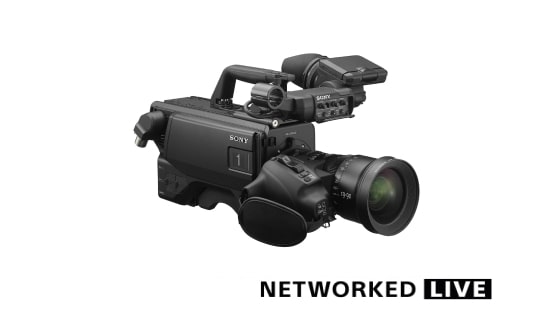
Broadcast system cameras earn their keep in live, multi-camera environments: they’re built around CCU shading, genlock, tally, and long-run fiber for instant, matched, remotely-controlled pictures across a dozen angles. Cinema cameras prioritize image character, dynamic range, and creative control, usually with a more post-oriented recording pipeline.
The interesting development is that these worlds are converging. Productions increasingly want the cinematic look inside a live, multi-camera control room — and manufacturers now build cameras (and PTZ and system-camera variants) specifically to bridge the gap. The right answer depends on your priorities, not on which category is ‘superior.’
Not sure which direction fits your room?
The fastest way to avoid an expensive mismatch is a 15-minute conversation with someone who designs these systems every week. Tell us what you shoot and we’ll point you to the right category before you spend a dollar.
Where cinema cameras fit — by environment
Film, episodic & commercial
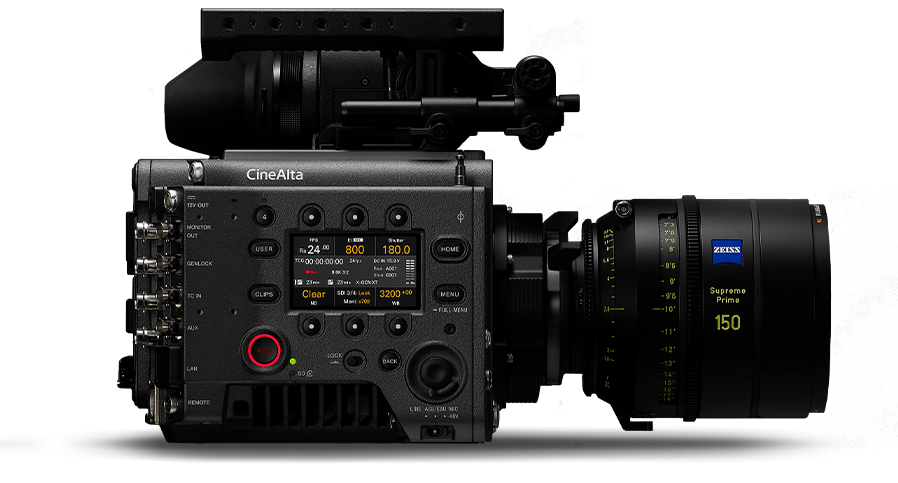
This is home turf — and where a cinema camera earns its reputation. Features, premium streaming episodics, and national commercials are shot on cinema bodies because the image has to hold up under the harshest scrutiny there is: theatrical projection, HDR delivery, and a colorist inspecting every single frame. Full-frame and Super 35 sensors, up to 16 stops of dynamic range, and internal RAW/X-OCN recording give your post team the latitude to push a bold, filmic look hard — without the picture ever breaking down.
And it isn’t just the sensor. Cinema cameras speak the language the rest of a high-end pipeline expects — S-Log3 and ACES color management, interchangeable PL and E-mount cinema glass, and rich metadata that flows straight into DaVinci Resolve, Premiere Pro, or Avid. You get a consistent, gradeable negative across every camera and every shoot day, so a flagship hero body and a run-and-gun B-cam cut together seamlessly. When a distributor, network, or agency hands you a technical delivery spec, a Sony cinema camera is what checks the boxes — and what makes the finished piece look like it belongs on the biggest screen in the room.
Sports & live events
Beyond the main hard-camera angles, cinema and PTZ cinema cameras add beauty shots, player-tunnel drama, and social-ready highlight looks that traditional broadcast cameras can’t easily replicate.
Corporate & studio
For branded content, executive messaging, and hybrid events, a cinema camera elevates production value immediately — and log/RAW capture gives your editors room to match a house color style across every asset.
Common first questions
- “Do I need full-frame?” Not necessarily — the right cinema body is often about matching color science and workflow, not chasing the biggest sensor. We help you avoid over-buying.
- “Can cinema cameras work in a live control room?” Increasingly, yes. Cameras designed for CCU control, genlock, and PTZ operation bring cinema imaging into live multi-camera setups.
- “What about lenses, media, and support?” A body is just the start. Lenses, media, monitoring, power, and support turn a purchase into a working package — which is exactly where guidance pays for itself.
Your next step
Cinema-style acquisition isn’t a trend — it’s where broadcast, worship, sports, and corporate production are all heading. The teams that make the transition smoothly are the ones who plan the whole system, not just the camera on the box.
As an authorized Sony Cinema Line dealer and the sole Sony cinema provider in the Southeast, TakeOne helps you figure out whether cinema cameras belong in your workflow — and if so, exactly which ones — with honest, no-pressure guidance.
Keep reading
- The Sony Cinema Line Explained: VENICE 2, BURANO, FR7 & HDC-F5500
- Sony VENICE 2: A Cinematographer’s Technical Introduction
- TakeOne — Authorized Sony Cinema Line Dealer
Request a Quote
Tell us about your production and we’ll get back to you fast with pricing, availability, and a recommended configuration — no pressure, just straight answers from people who build these systems for a living.
Prefer to talk it through? Call 1-877-81-TAKE1 (877-818-2531) or email mail@takeone.tv.